About Ketuna

One lamp lights the next

Ketuna is a mentoring and training house for embedded systems, VLSI, systems engineering and product development. Working engineers teach the whole path from silicon to a shipped product, with open-source tools only and AI used in every lab, and checked every time.

Mission and vision

Mission

Train engineers who can take an idea from silicon to a shipped product, who use AI tools fluently and critically, and who can run their own work like professionals: spec it, estimate it, review it and report on it.

Vision

Engineers who are engineer-ready, not just job-ready: who understand how chip, board, firmware, system and product fit together, who keep the open-source tools they learned on, and who show their skill through public, checkable work. And colleges, companies and STEM programs that can build those skills with us, at no licence cost.

The plan is to start small and prove it: free weekend workshops first, then a small pilot cohort, then hiring partners and a student tape-out, and only then college and corporate programs at scale. Skill development, soft skills and program management are taught inside the engineering work every week, not as a separate module.

Why Ketuna exists

There is a gap between what many graduates learn and what chip, embedded and product teams need on day one.

Pieces, not the whole

Training is often split by domain: a chip-design course, a firmware course, a job-role course. Teams need engineers who understand how their piece fits a whole product, from chip to board to firmware to the finished device.

Tools you cannot keep

Licensed tools stay behind when the course ends. Open-source flows, from simulation to a real tape-out on open process kits, let you practise at home and show your work in public.

Little review, little practice

Self-paced material rarely asks "how do you know it works?". Teams expect specs, test plans, code and design reviews, estimates and postmortems, and now the judgment to check AI-written work.

Semiconductor and electronics design work in India is growing, and so are public chip-design and skilling programs. Ketuna wants to add to that effort with mentored, hands-on practice that colleges and companies can build on, not replace.

The name and the logo

In Sanskrit, ketu means a banner, a beacon, a ray of light, and "the one who leads". That is what good mentors are: people who have walked the path a little ahead and hold up a light for the next engineer.

The logo is a lit diya inside a chip. The chip is the program's scope, silicon to product. The flame is the light that is passed on: dīpād dīpam, "one lamp lights the next". Every engineer we mentor should, in time, light someone else's lamp.

Colours come from the logo: indigo, amber and cream.

What we believe, and what we promise

By hand first, then with AI

Every lab is done twice: first yourself, then with an AI assistant and a log of how you checked its output. The AI part is graded on the checking, not the speed. Concept exams are taken without AI.

Open-source tools only

No licences, ever. You can install every tool at home, keep using it after the program, and put every project in a public portfolio. The toolchain.

Honest outcomes

We do not promise placements. Once cohorts have run, we plan to publish real, audited outcomes, whatever they are, and never a "100% placement" claim.

Small cohorts, real reviews

Mentors who are working engineers, design and code reviews every week, a one-to-one check-in and a written status, the same rhythm as an engineering team.

Privacy by default

Our forms ask only for what we need to reply or plan. No tracking, no analytics scripts, no advertising cookies. See the privacy note.

Partners, not competitors

We would rather work with colleges, companies and STEM programs than compete with them: faculty development, course modules, lab setup and sponsored capstones. Partnering.

Who's behind Ketuna

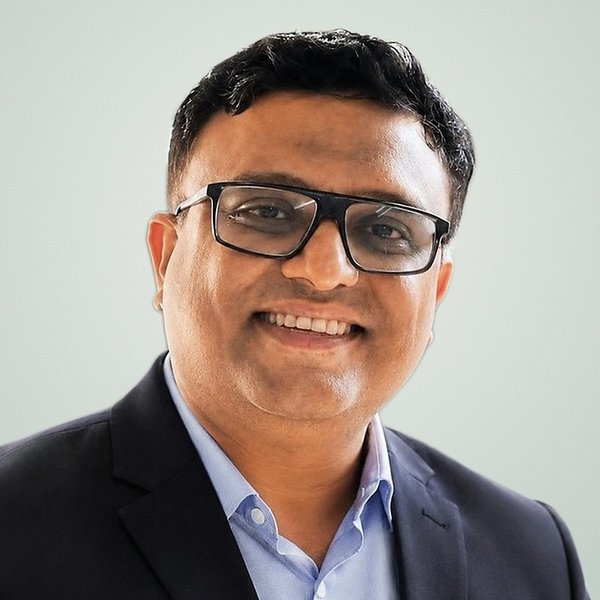
Swapnil Sapre

Swapnil Sapre

Skilling & Mentoring Partner · Bengaluru

Swapnil has spent more than 24 years in semiconductors, embedded and systems, taking products from spec to silicon to volume production. Today he heads chip and systems engineering at an AI-processor company that builds ultra-low-power AI processors, covering chip specification to GDS2, pre- and post-silicon verification and validation, bring-up, boards, SDK and system software, and the path from tape-out to high-volume manufacturing.

Earlier he worked on flash-storage SoC architecture and product-line management (SD, microSD, SSD, NVMe), CPU and GPU SoC verification, ARM platform validation, DMA controller architecture and SoC verification platforms, and DO-254 IP. He began his career teaching VLSI and embedded systems at an engineering college in Goa and building embedded products, and today he mentors engineers growing into architects and leaders.

"Building technology with purpose, businesses with responsibility, teams with trust, and people with empathy."

Papers and reviewing

  • Papers at SNUG 2007, IPESC '09 (Grenoble), ICWET '11 and FOSS.IN '09, on the VLSI ecosystem and open hardware
  • Reviewer for the IEEE VLSI Design & Technology Symposium and DAC 2010
  • Recognized by the President of India for a paper on re-engineering engineering education
  • Author of four books spanning technology (open hardware, Python), music and poetry

Education

  • M.S. VLSI CAD, Manipal University
  • PGSEM in Software Enterprise Management, IIM Bangalore (a rigorous 2.5-year programme)
  • DLP Embedded Systems, IIT Bombay
  • PG Diploma VLSI; B.E. Electronics & Telecom, BIT Durg

Away from work, a trained tabla and mridangam player and a Hindi poet.

Mentors and advisors

Ketuna is recruiting two to three part-time industry mentors for the first cohort: practising engineers in design, verification, physical design, embedded, systems or product roles who enjoy reviewing work and helping people get unstuck. Mentors and advisors will be named here only once they have agreed.

Become a mentor

Roadmap

What is built today, and what comes next. Everything after 2026 is planned and may change.

Ketuna roadmap Four stages. 2026, done: 30-plus labs across the common core and tracks A, B, D and E, 100 study guides, 12 common-core slide decks, a 400-question quiz bank, admission test papers and a capstone kit. Next, planned: the free weekend workshop, Tape out in a weekend. 2027, planned: the first 12-week cohort, starting with the common core and track A, and a hiring-partner network. Later, planned: a first student tape-out on an open shuttle, track C analog and mixed-signal, college programs and corporate upskilling. 2026 · Built Next · Planned 2027 · Planned Later · Planned 30+ labs: core, A, B, D, E 100 study guides 12 common-core decks 400-question quiz bank Admission test papers Capstone kit and data sets Free weekend workshop: "Tape out in a weekend" Tiny Tapeout starter design Dates after a dry run First 12-week cohort Core + track A first Hiring-partner network Audited outcomes report First tape-out, open shuttle Track C: analog, AMS College programs Corporate upskilling Done Planned, may change Ketuna roadmap 2026, done: labs, study guides, slide decks, quiz bank, admission papers and capstone kit. Next, planned: the free weekend tape-out workshop. 2027, planned: the first cohort, starting with track A, and a hiring-partner network. Later, planned: a first student tape-out, track C analog, college and corporate programs. 2026 · Built Next · Planned 2027 · Planned Later · Planned 30+ labs: core, tracks A, B, D, E 100 study guides 12 common-core slide decks 400-question quiz bank Admission test papers Capstone kit and data sets Free weekend workshop "Tape out in a weekend" Tiny Tapeout starter design Dates after a dry run First 12-week cohort Common core + track A first Hiring-partner network Audited outcomes report First tape-out on an open shuttle Track C: analog, mixed-signal College programs Corporate upskilling Done Planned, may change
The material is built and tested today. The first cohort is planned for 2027 and is expected to start with the common core and track A (design and verification), which has the most labs ready; track C (analog) comes later.

Contact

Write to us

Forms Open soon

The forms ask only for what we need to reply. See the privacy note.